JOSS PAPER
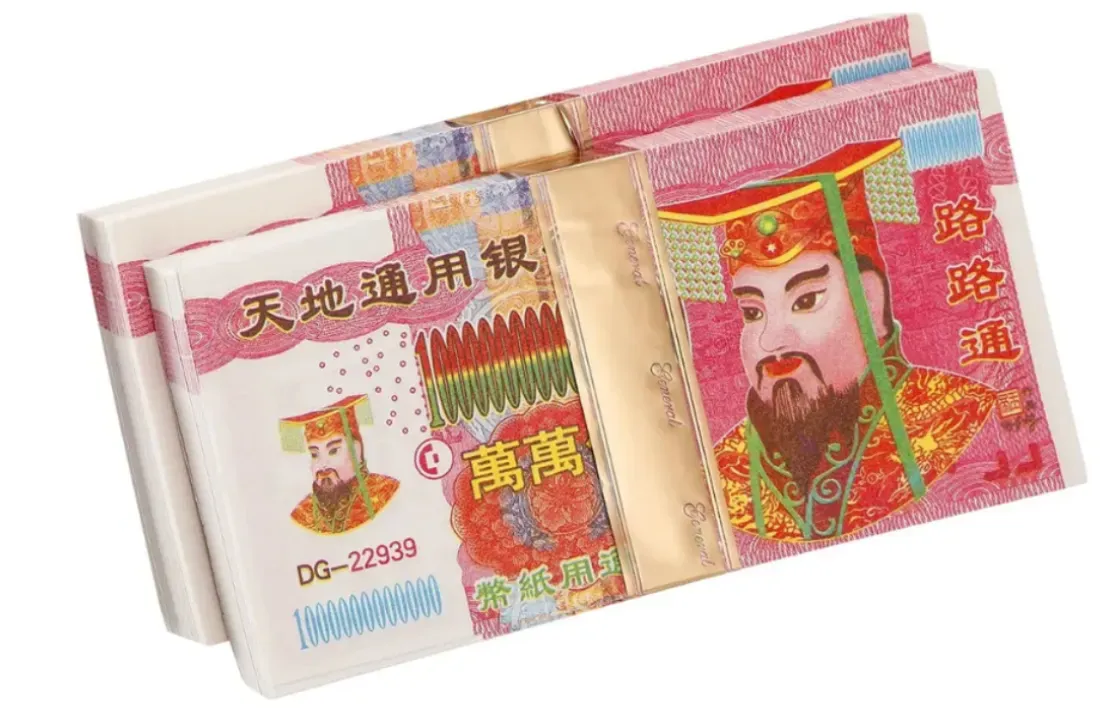
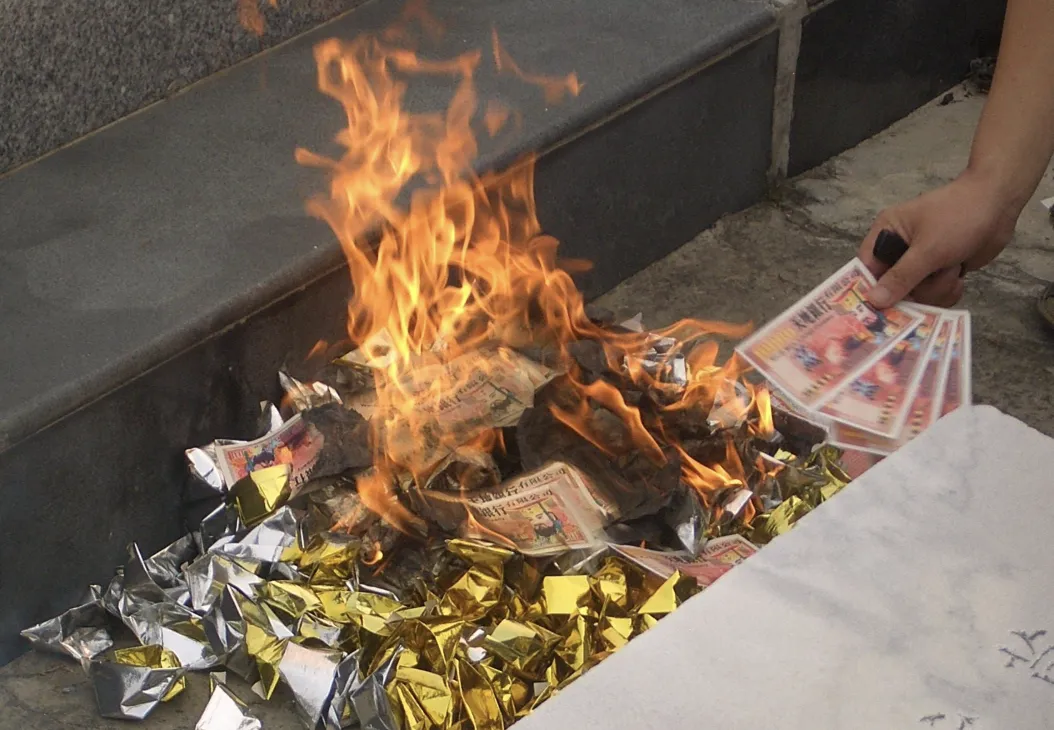
Since the culture of burning is often “no object left,” there is much room for archaeological reading. Rather than directly leaving the material in the tomb (head), it can remain indirectly as an incineration trace (ash, soto, incinerator/furnace, combustion residue) outside the tomb/in the ritual space.
Therefore, it is possible to think about the possibility that “the ability to perform funeral rites (burning, ritual, community mobilization) was more important than “the accumulation of funeral items” in some societies. It is also conceivable that when norms such as “prohibition of luxury/suppression of funeral items” arise, the ritual is rearranged in the direction of “burning them away instead of asking”. (No material remains, but symbolic delivery is maintained).
“Money”: bank notes, gold/silver foil, coin copy, gold bullion paper, etc “Living goods”: Paper houses, clothes, home appliances, cars, mobile phones... (modernized consumer goods of the underworld) “For a new/government office”: a paper dedicated to a particular identity (e.g., a person of property) or to a list office This differentiation itself is also an indicator of “what the underworld worldview sees as important.” Organization
Hell money: a common name commonly used in the English-speaking world (especially referring to the “underworld banking” style) Joss paper: a broad category of ceremonial paper (including money) Spirit/Ghost Money: Emphasis on Money for the Dead
Underworld Money (China)
→ “Underworld Economy/Bureaucratic System” Frame
The decision is drawn, “The underworld’s cities/government offices/banks are rolling, and goods are needed to be used there.” In many cases, it includes maintaining the life after death (wealth/consumption) and processing (penalties/prosecutions/protection) within the underworld bureaucracy. If Lao-tzu money is ‘passed’, the imagination of underworld money extends to ‘living after settlement + administration’. It also goes to the dead, but ritualistically, the message “It is delivered to the government offices/deities/management of the underworld” is interpreted symbolically. (Administration of the underworld).
The key mechanism is to “burn” the paper money (golden silver paper, list paper money, etc.), and it is difficult to remain in the tomb, so indirect signals such as incineration traces (re-laying, combustion traces, incineration facilities) of outside the tomb or ritual places become more important. “Bureaucraticization/urbanization of the afterlife” is at the core of the interpretation of the worldview. (The search results also mention arguments such as “the notion that the underworld is bureaucratically operated in Chinese folk beliefs developed from an early age.”
Burial/gift
→“Continuation of possession/hierarchy” frame
A decision is drawn that “even after death, they bury necessary things (or symbolizing status) together and ‘companion’ is drawn.” It may be the provision of post-life goods (practical), and more often, it becomes “hierarchy/identity/extension of power (representation) when alive.” It is interpreted as following the deceased as ‘ownership’. (A picture that is closer to ‘I will take’ than the money paid to the office.)
Using real objects (such as earthenware, trinkets, weapons, food, animal sacrifices, etc.) as burial goods and offerings, the offerings are “fed and offered” and the burial goods are “accompanied by possession”… It also splits inside in this way. This is a ritual that best captures archaeological signals, and the burial structure/department composition/arrangement remains directly. The more the afterlife is imagined as “the extension of the transfer (house/living/position), the stronger the logic of the burial goods.